Inside the Hybrid: How Solar, Batteries and Diesel Work Together at Sabon Gari, Kano
Focus: Technical Perspective | 15MWp Hybrid Solar Farm, Sabon Gari Market, Kano | Commissioned 6 June 2023 | 4 Layers: Solar + Battery + Diesel + EMS/SCADA
The 15MWp system powering one of Kano's busiest markets is a case study in designing for reliability, not just capacity.
When engineers design power for a major market, the challenge is not simply producing enough electricity. It is producing it every hour of the day, through changing weather, fluctuating demand and the occasional equipment fault. The hybrid solar farm at Sabon Gari Market in Kano, which entered commercial operation on 6 June 2023, is built around that principle.
Designed, supplied, installed, tested and commissioned by International Consolidated Contractors Offshore SAL for the Rural Electrification Agency, the system brings together four core layers: solar generation, battery storage, backup generation and intelligent control.
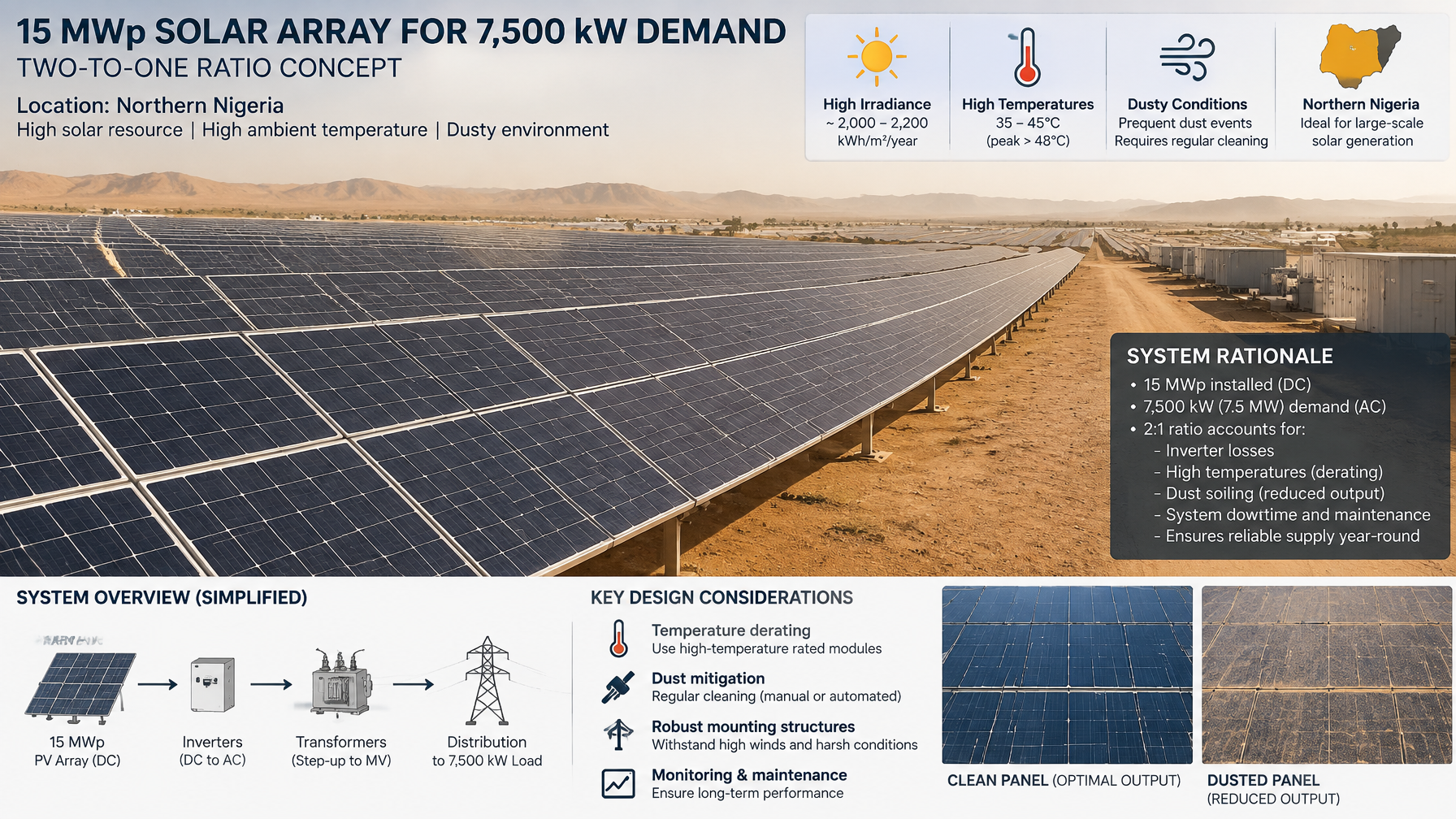
Layer One: Oversized Solar (15MWp for 7,500kW Demand)
The photovoltaic array is rated at 15MWp, while the peak power demand it is designed to serve is 7,500kW. That roughly two-to-one ratio is intentional. A panel's peak rating reflects ideal laboratory conditions, and in the field, heat, dust, sun angle and the hazy harmattan season all reduce output. Oversizing ensures that, on a good day, the system can meet demand and charge the batteries at the same time.
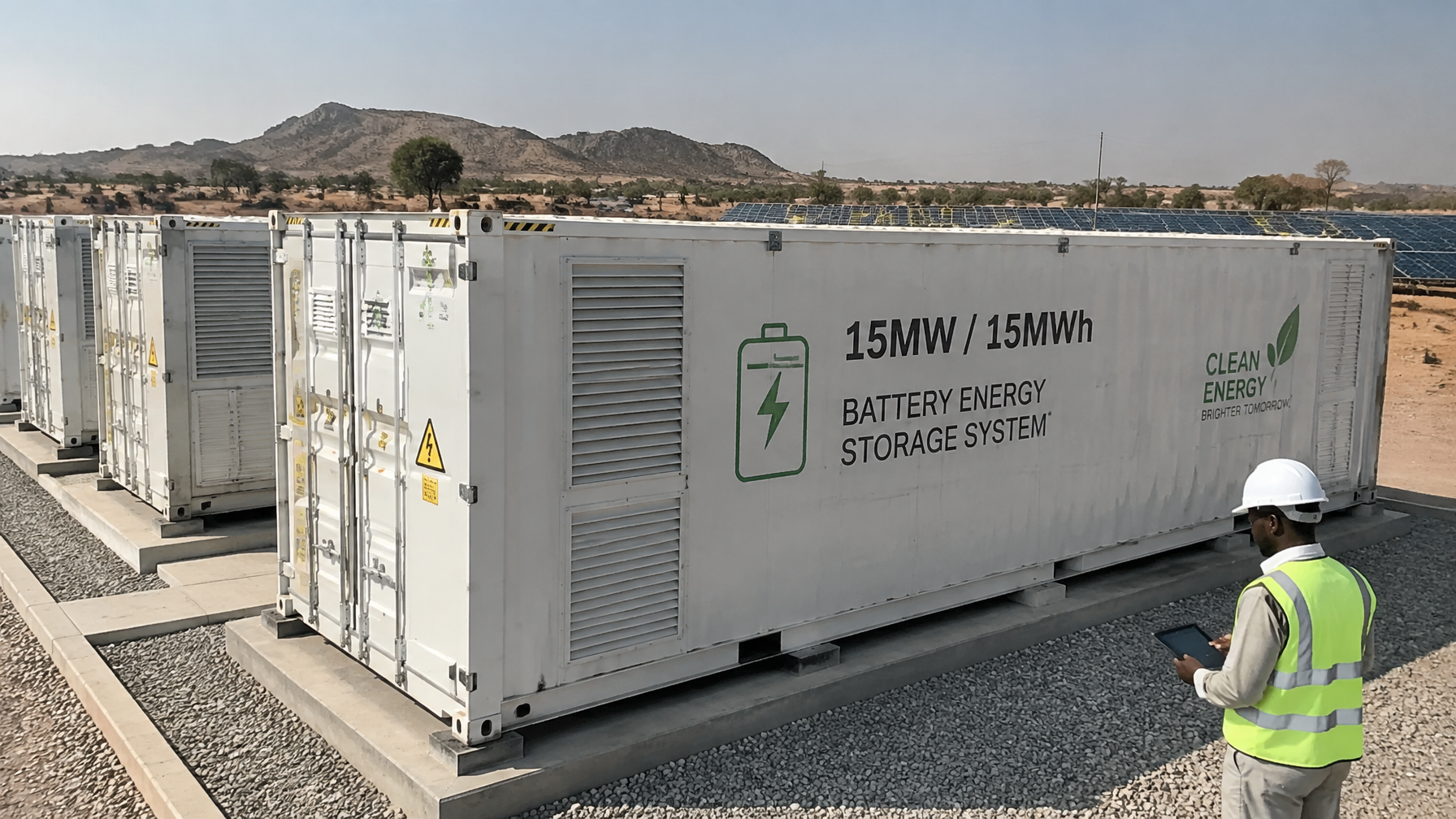
Layer Two: Battery Storage (15MW/15MWh Lithium-Ion)
The lithium-ion battery energy storage system is rated at 15MW/15MWh. It can deliver up to 15MW and store 15 megawatt-hours — enough to supply the full 7,500kW peak for about two hours, or a lower evening load longer. Beyond storing energy for after sunset, the battery smooths rapid swings in solar output caused by passing clouds and responds almost instantly to changes in demand, helping keep voltage and frequency stable.
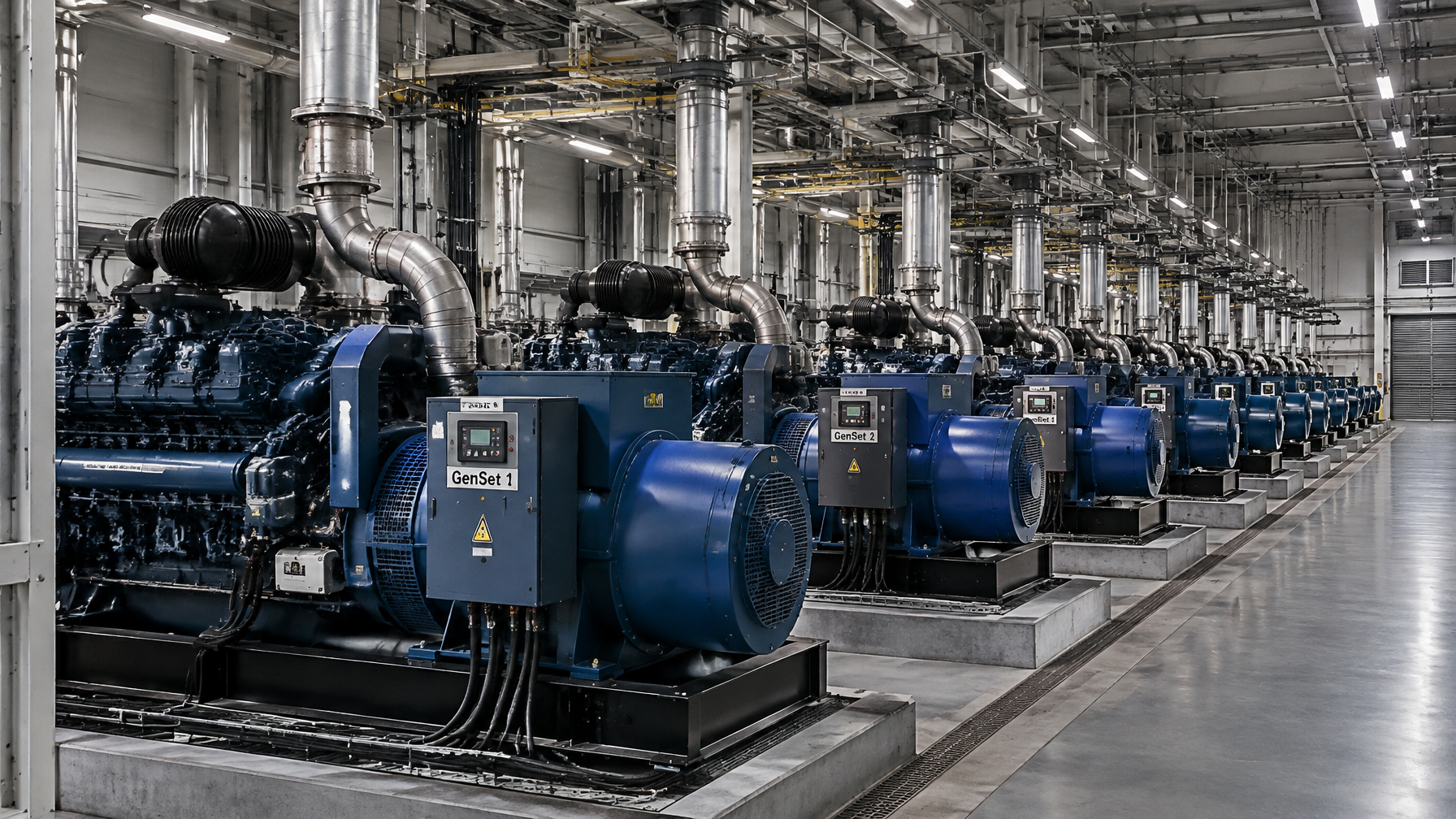
Layer Three: Synchronized Diesel Backup (14x 1,100 kVA)
Backup comes from fourteen 1,100 kVA diesel generators operating as a synchronized system. The modular design is significant — rather than one or two very large units, the plant can start only as many generators as needed, keeping each near its efficient range. It also builds in redundancy: if one unit is down for maintenance, others can still cover demand. In a hybrid system, generators are the final safety net when solar and battery are insufficient.
Layer Four: The Brains — EMS + SCADA + AMI
Tying everything together is a full energy management system (EMS), which decides moment by moment where power should come from: straight from panels, from battery, or from generators. Its logic determines when to charge/discharge the battery, when to start generators, and how to share load.
Oversight comes from a SCADA system that allows remote monitoring and control, while security cameras provide live monitoring around the clock. At the customer end, advanced metering infrastructure (AMI) records consumption digitally, supports accurate billing, and helps identify losses and faults.
The Network & Built for the Long Run
The project included cabling and energy distribution, plus streetlight installation/rehabilitation. The REA reports the system has been operated and maintained by the contractor with no technical problems since online, backed by a 15-year operation and maintenance contract including all projected spare parts — critical for a hot, dusty climate (panel cleaning, battery thermal management, generator servicing, software updates).
Lessons for Engineers
The Sabon Gari design illustrates principles for commercial mini-grids across Africa: oversize solar relative to demand, size storage to cover evening peak, keep backup modular and synchronized, and invest heavily in monitoring and metering. Reliability comes not from one component, but from integration and 15 years of disciplined maintenance after the ribbon is cut.
Sabon Gari Technical At-A-Glance
| Layer | Spec | Purpose |
|---|---|---|
| Solar | 15MWp PV | Oversized 2:1 vs 7,500kW demand for heat/dust/Harmattan derating |
| Battery | 15MW/15MWh Li-ion | ~2 hours at peak, longer at evening load; smooths clouds, stabilizes voltage |
| Diesel | 14x 1,100 kVA synchronized | Modular backup, redundancy, efficient loading |
| Control | EMS + SCADA + AMI + Cameras | Source selection, remote control, billing, fault detection |
Frequently Asked Questions
Q: Why is solar oversized 15MWp for only 7.5MW demand?
To compensate for real-world derating (heat, dust, angle, Harmattan) and still charge the 15MWh battery while meeting daytime demand.
Q: How long can the battery run the market?
About 2 hours at full 7,500kW peak, longer at reduced evening load. It also smooths cloud transients within seconds.
Q: Why 14 small generators instead of 2 big ones?
Modularity allows running only needed units near efficient load and provides redundancy if one is down.
Based on REA commissioning of Sabon Gari 15MWp hybrid 6 June 2023 under NEP, by ICC Offshore SAL. For latest status consult rea.gov.ng.

Comments
Post a Comment